
Safer, smarter
inpatient care

Proactive fall prevention and continuous visibility across single-patient rooms and wards.
Combating deconditioning, protecting restorative sleep, and supporting frailty management.
Time-stamped logs and risk-driven alert configuration to eliminate alarm fatigue and ensure targeted care.
Addressing the complex realities of acute older adult care

The inpatient safety and visibility gap
For vulnerable older adults in senior acute inpatient settings, enforced bed rest leads to 2–5% muscle loss in just the first few days. Meanwhile, frequent nighttime checks disrupt sleep, triggering acute delirium, confusion, and severe distress. Traditional reactive alarms sound only after a patient has already fallen. With the average costs of a fall in the hospital reaching up to £2,600 per patient, patient fall rates in hospitals remain an increasing problem for NHS trusts and acute healthcare providers.
Continuous, facility-wide awareness
LIO is the proactive safety platform for inpatient care—specifically for acute elderly care wards— bringing real-time intelligence to every room.
LIO restores continuous situational awareness to detect high-risk movements before an incident occurs. By offering contactless spot-check vitals, clinical teams verify well-being without waking patients—delivering effective delirium prevention strategies, combating deconditioning, and protecting restorative sleep across senior acute inpatient pathways.
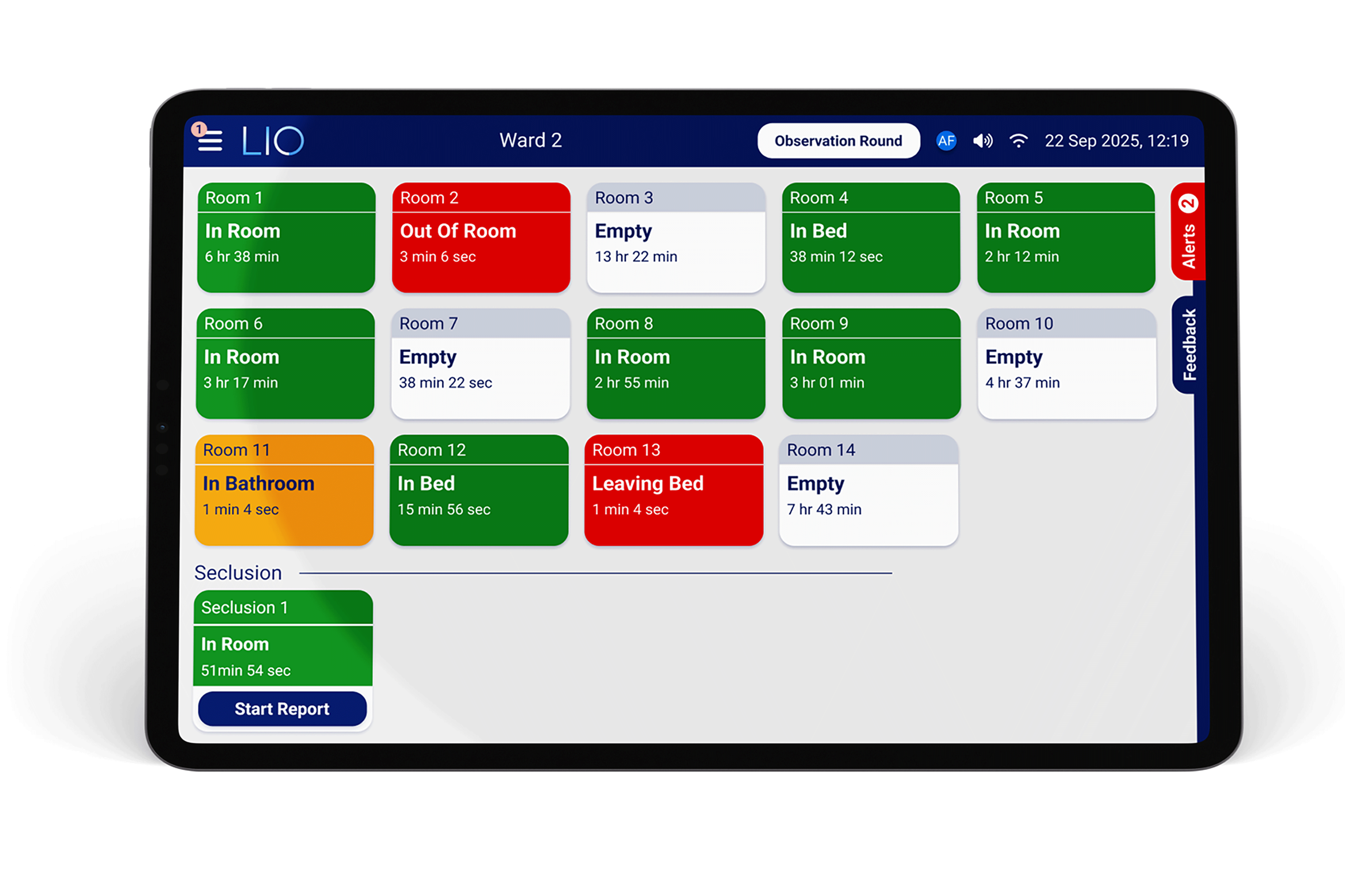
The unified platform for inpatient care
Safer environments


Personalised care
Clinical confidence
Sleeping peacefully, restoring wellbeing, returning home
The story of a female, older adult patient as told by a Modern Matron (NHS trust, England)
Persistent distress and agitation
“A patient who had several weeks of incidents, refusal of medication, physical restraint, and IM medication due to level of distress, violence, and aggression. Staff had noticed that she was easily disturbed, always looked tired and her symptoms were worse in the mornings and evenings. This lady was looking to be transferred to a more secure unit on a 1:1 with covert medication plans. As an MDT we decided to activate LIO at night to promote sleep hygiene.”
Rapid clinical & behavioral recovery
“After only a few nights her sleep pattern improved significantly. She slept for around 8/9 hours a night. This had a positive impact on medication compliance and her dietary intake in the morning. Furthermore, her mood rapidly improved, and the teams need to intervene physically stopped. She began engaging in meaningful activities and her diet and fluid intake was within healthy amounts. Improved sleep had such a positive impact on her wellbeing and mental health, she was able to remain on the ward without the need for 1:1 support. In fact she was discharged within a few months.”
Successful discharge home
“The catalyst for this change in presentation was the implementation of LIO. The system not only changed her quality of life but also where she got to live for her future in a less restricted environment which she enjoyed. Before this, she would not smile, engage in any 1:1 or ward activities, no quality time with family visits. All of that changed for the better. She would now dance, sing, and enjoy activities off the ward with peers and family.”

If you would like to find out more about reducing patient falls in hospitals and improving inpatient fall rates, chat with a member of our team:
Get in touch1. LIO’s vital signs software is registered as a cleared medical device under the name 'Vital Signs'; LIO’s sleep software is registered as a cleared medical device under the name 'Oxevision Sleep System'.


