De-risking behavioral health: Uncovering the hidden economics of patient safety
Traditional psychiatric observation models haven't changed in decades—and the hidden financial strain on behavioral health facilities is growing.
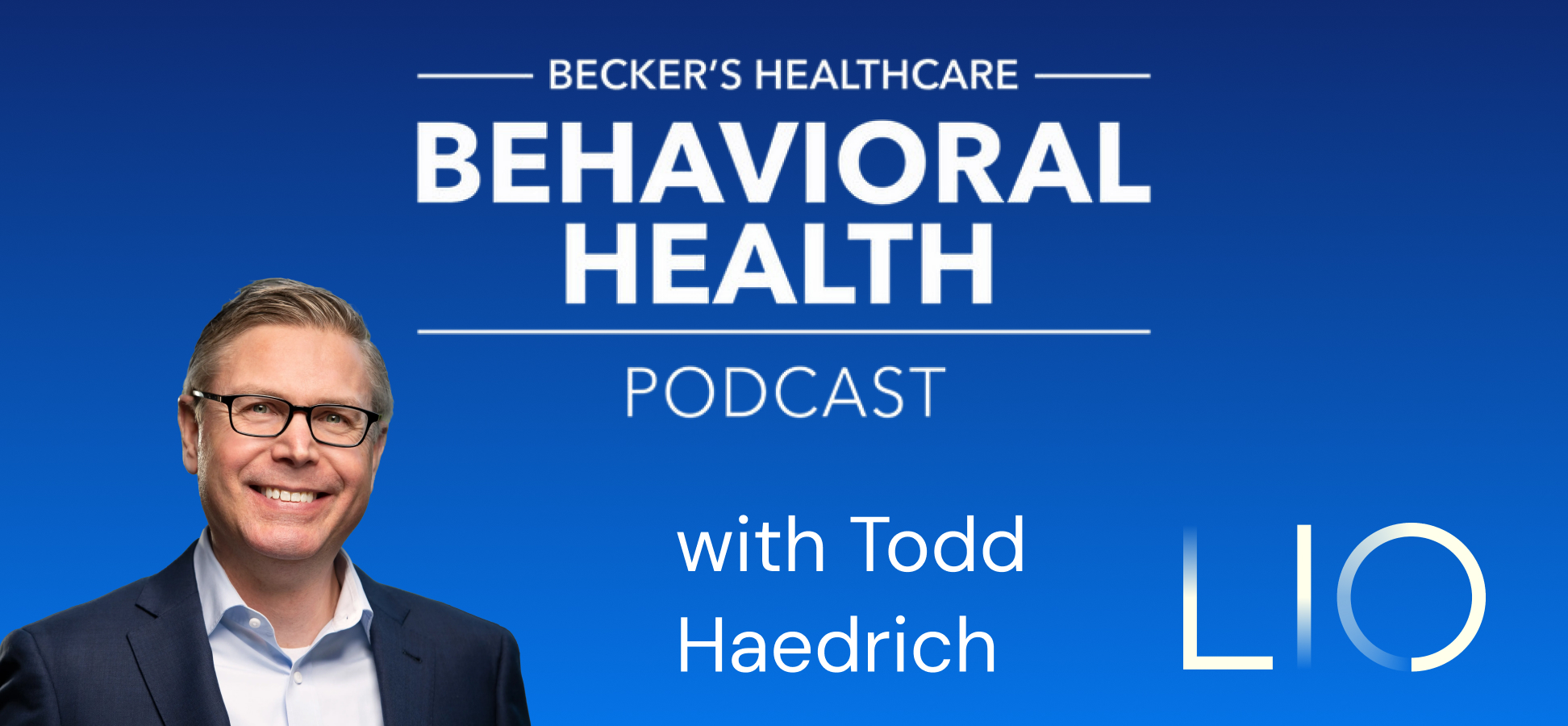
In this episode of the Becker's Behavioral Health Podcast, LIO's CEO, Todd Haedrich, discusses the hidden economic and operational costs of patient safety in behavioral health. Introducing the PLGL (Patient Liability and Grievous Loss) framework, he explores the real financial run-rate of sitter labor, sentinel events, and staff turnover—and how continuous monitoring technology can help to reduce reactive spend, de-risk operations, and allow staff to focus on therapeutic care.
The hidden economics of safety:
Why sitter labor ($8k–$12k per bed annually), turnover, and liability create an unpredictable financial run-rate.
The limits of Q15 rounding:
Why 15-minute checks leave patients unobserved >90% of the time—and how ~80% of adverse events happen during night time observation gaps.
The PLGL framework:
How unifying scattered safety costs into one metric helps leaders control reactive safety spend.
Listen to the full episode here.